Phone vs. Mirrorless Camera for Dessert Photography: Which Handles Custard Texture Better?

Set a crème brûlée on a marble counter and photograph it twice — once with a phone, once with a mirrorless camera and a macro lens — and the difference shows up before you finish your coffee. Not in sharpness, exactly, and not in color. It shows up in the custard itself: the way light slides across that wet, quivering surface, and whether the camera can hold onto the fine bubbles, the vanilla specks, and the amber pool of caramel at the edge of the ramekin.
What custard texture actually asks of a camera
Custard is a difficult subject, and it is worth naming why. It is low in contrast, semi-reflective, and rarely still. The surface gives you a soft specular sheen rather than a hard highlight, and it changes shape between shots as the pudding settles. Three things decide whether it looks like food or looks like a beige smear:
- Micro-contrast. Vanilla flecks, a cracked sugar crust, tiny bubbles at the rim of a flan — detail at the smallest scale.
- Highlight roll-off. The glossy sheen should fade gradually into the surface, not clip to flat white.
- Tonal gradation. The pale yellow of a custard tart has to stay pale yellow in the shadowed side, not turn gray or orange.
Phones and mirrorless cameras handle these three demands differently, and the winner depends on which one you care about most.
Close-up detail: the mirrorless advantage is real, but narrower than you think
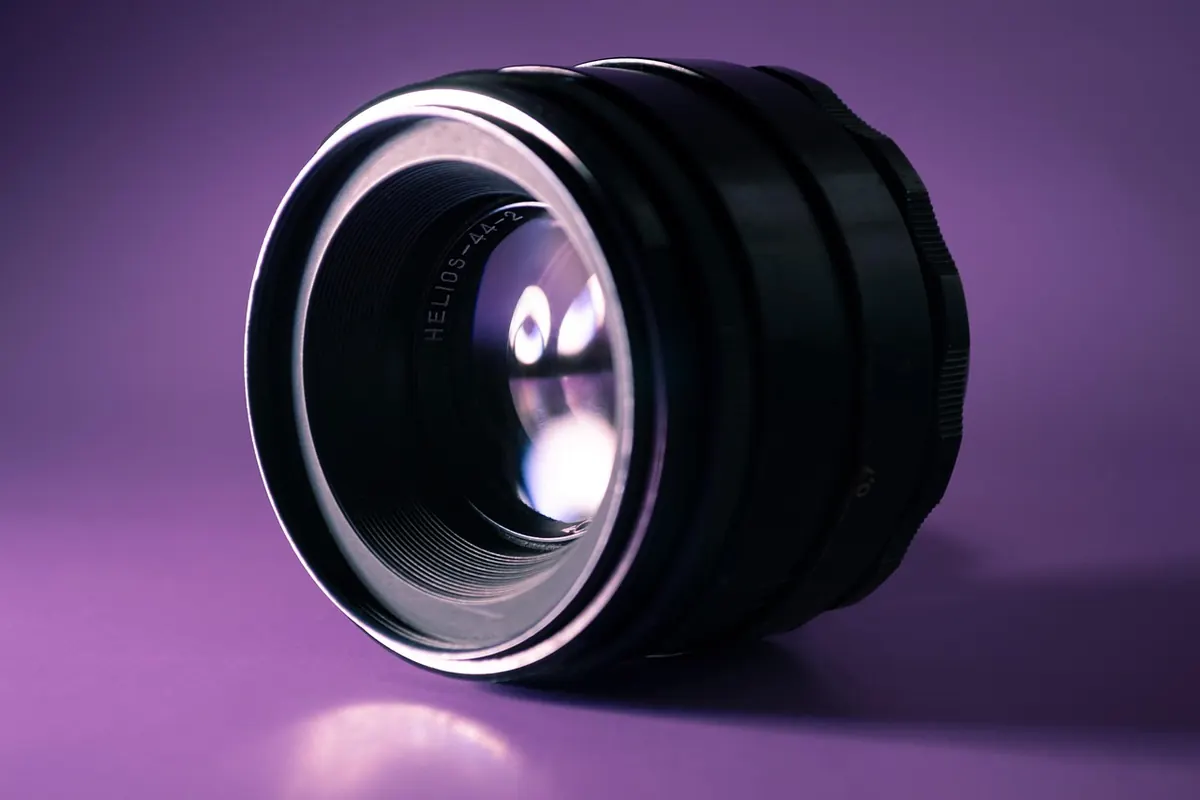
A dedicated macro lens on an APS-C or full-frame body is still the tool for the finest custard surfaces. A 60mm or 90mm macro lets you fill the frame with a two-inch square of crème brûlée and keep the camera at a comfortable working distance, so you are not casting your own shadow onto the dessert. The larger sensor and better glass resolve the caramelized sugar as a network of cracks rather than a brown haze.
The catch is depth of field. At true 1:1 magnification and f/8, you are working with roughly a millimeter of acceptable focus. Focus stacking — several frames at slightly different focus points, blended later — solves it, but the custard has to sit perfectly still, which means a tripod and, ideally, a cool room.
Where phones quietly win
Phones cheat the depth-of-field problem entirely because their sensors are tiny. At macro distance, most of the tart is sharp without any stacking at all. Add in-camera focus bracketing and a minimum focus distance of a few centimeters, and you can shoot a shaking panna cotta one-handed while the table is still being cleared. On the ultrawide macro lens, though, expect soft corners, some barrel distortion, and a tendency to over-sharpen fine detail until the custard skin looks like sandpaper.
Where mirrorless pulls ahead
Skin. That thin, slightly wrinkly film on the top of a baked custard is where phone processing struggles most. Noise reduction smears it, sharpening halos it, and HDR tone mapping often flattens the gentle sheen into a matte finish. A mirrorless file, especially a RAW one, holds the transition from highlight to midtone intact.
Low light: cafe corners and candlelit tables
Cafes are dim, mixed-color, and full of reflective surfaces. Phones handle this surprisingly well on paper: they stack multiple frames, align them, and produce a clean image from a scene that looks murky in person. The problem is motion. Frame stacking assumes nothing moved, so a wobbling custard or drifting steam can turn into a soft, ghosted mess.
A mirrorless camera gives you control instead. A fast prime at f/1.8 plus in-body stabilization lets you shoot at a reasonable shutter speed with a low ISO, and you can dial the aperture to f/4 for a close-up so the front rim of the ramekin stays sharp. Two habits help either camera:
- Shoot near a window if you can, and turn the dessert so the light skims across the surface rather than hitting it flat.
- Set white balance manually or shoot RAW. Tungsten bulbs plus a daylight window will make pale custard look green on one side and orange on the other.
A small LED panel with a sheet of diffusion material costs little and does more for custard texture than any camera upgrade.
The cafe workflow: order, shoot, edit, eat
This is where phones are genuinely hard to beat, and not for image quality reasons. A phone lets you photograph the dessert, edit in an app, and post before the custard warms. No bag, no lens changes, no card offload. Staff rarely mind, and you are not the person who brought a tripod to brunch.
Mirrorless shooting in a cafe is a slower ritual. You will want to ask permission if you plan to rearrange the table, keep your setup compact, and accept that a tripod may not be welcome during busy hours. In exchange, you get files worth editing on a real screen later. If you are shooting for a client or a portfolio, that trade is usually worth it. If you are shooting for the joy of it, keep the phone in your pocket and the camera in the bag until the light is genuinely good.
A quick decision checklist
- Choose the phone when you need the whole dessert sharp, the light is decent, and speed matters more than pixel-level texture.
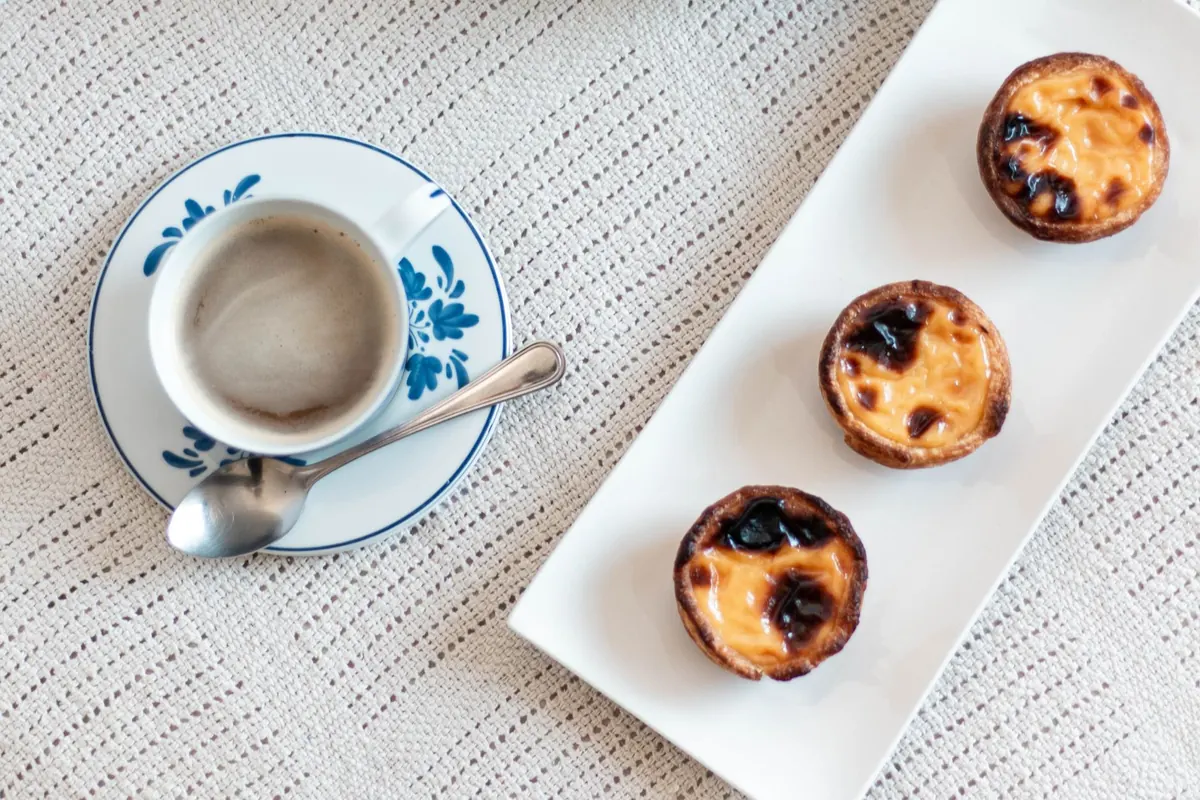
- Choose mirrorless when the surface detail is the point — cracked brûlée tops, flan, custard tarts with visible nutmeg.
- Choose mirrorless if you plan to print, crop heavily, or hand files to a client.
- Choose the phone if you shoot in busy rooms where a tripod and a bag would be intrusive.
How I would shoot a crème brûlée tonight
If I had a ramekin, a window, and both cameras, I would start with the phone at a low angle, close enough that the caramel pool fills the bottom third of the frame. That shot takes ten seconds and usually works. Then I would switch to the mirrorless camera with a macro lens, place the dessert so window light rakes across the sugar crust, and shoot at around f/5.6 from a slightly higher angle to catch both the sheen and the cracks.
- Focus on the nearest edge of the crust, not the center.
- Check the histogram — protect the highlights on the glossy surface.
- Take three frames at f/4, f/5.6, and f/8, then keep the one with the best balance of detail and softness.
- Edit for texture, not contrast. Lift the shadows slightly and leave the midtones alone.
Whichever camera is in your hand, the custard rewards the same things: soft, directional light, a clean background, and patience. The gear decides how much of that texture survives to the final file. The light decides whether there is any texture worth saving.
Photo: ClickerHappy / Pixabay